Gross Motor Activities for Kids
Gross motor skills are an important part of children's physical development and help them develop the coordination, balance and body control they need for everyday movement. They also provide a foundation for developing fine motor skills. These simple gross motor activities give children opportunities to build strength, balance, coordination and confidence through active play.
Watch the video below to see eight gross motor activities for kids in action, using simple equipment to create fun movement challenges for home or the classroom.
Try these 8 gross motor activities for kids, including fun balance, coordination and movement challenges using simple equipment. These activities are great for encouraging active play at home or in the classroom.
8 Gross Motor Activities for Kids
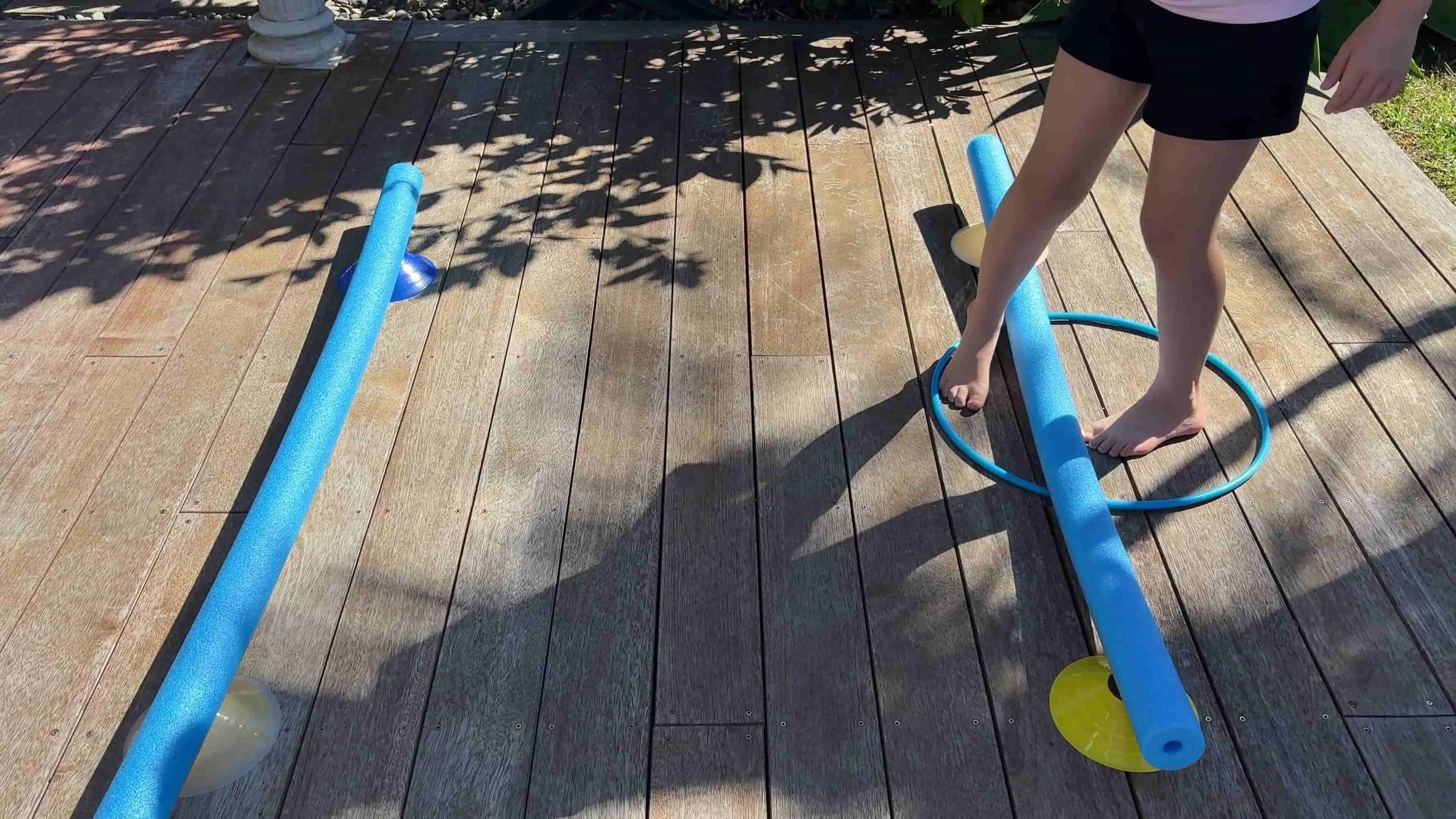
Hoop Step Challenge
In this gross motor challenge, children use their feet to move a hula hoop under a pool noodle, then step over the noodle and into the hoop. It’s a fun way to practise balance, coordination and body control.
What you need:
Hula hoops
Pool noodles
Cones
Instructions:
Place each pool noodle across two short cones to create a low beam.
Position a hula hoop in front of the pool noodle.
One child stands inside the hoop and uses their feet to push it underneath the pool noodle.
Once the hoop is through to the other side, the child carefully steps over the noodle and into the hoop.
Continue along the course, moving the hoop under each beam before stepping over it.
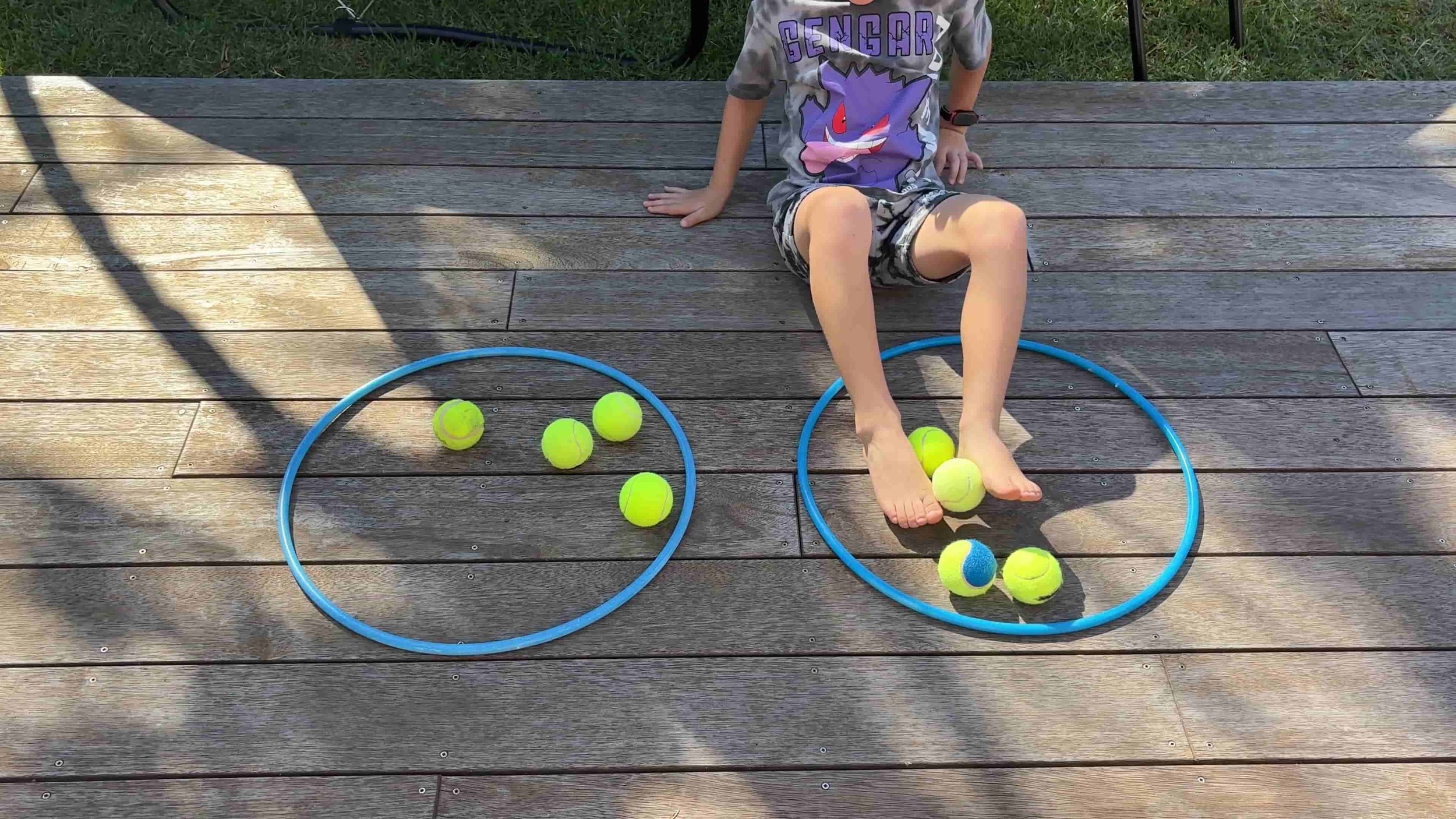
Tennis Ball Transfer
Children transfer tennis balls between two hoops on the ground using only their feet. This activity helps eye-hand coordination as well as body control where weight is shifted to stablise the legs when moving balls from one hoop to another.
What you need:
Two hoops
Tennis balls
Instructions:
Place two hula hoops on the floor
Place tennis balls in one hoop
The child sits in front of both hoops and picks up one tennis ball with their feet.
The child then puts the tennis ball into the empty hoop.
They then repeat until all the balls are transferred.
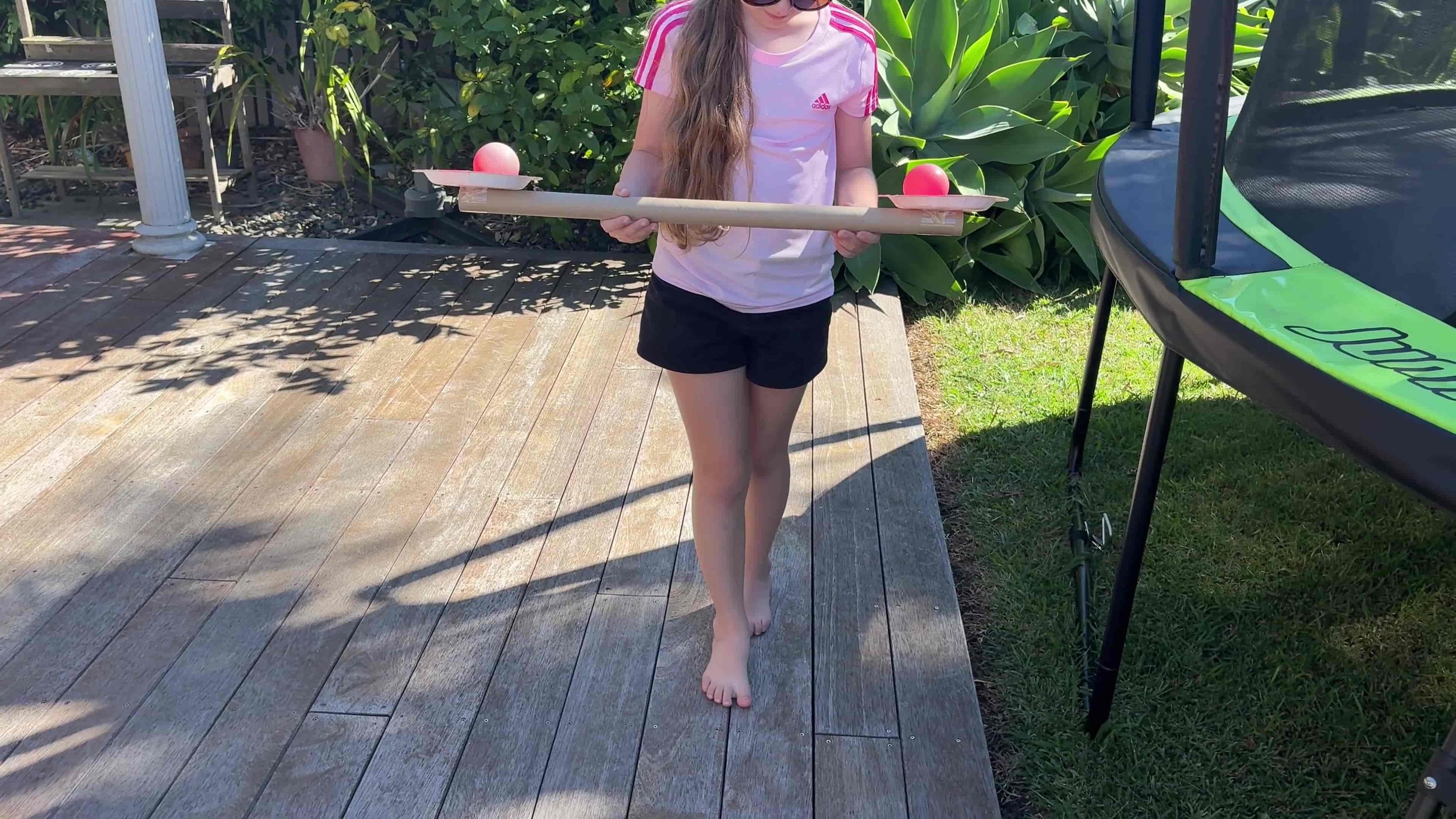
Tightrope Balance Walk
In this tightrope balance challenge, children walk along a straight line while balancing a lightweight ball on each side of a holding bar. They’ll practise balance, coordination, focus and concentration as they try to keep the balls in place while walking steadily along the line.
You will need:
A long cardboard tube
Paper plates
Lightweight balls
A straight line to walk along
Instructions:
Create a holding bar by attaching a paper plate to each end of the cardboard tube.
Place a lightweight ball on each plate.
The child holds the tube with both hands, keeping it level so the balls stay on the plates.
The child walks slowly along the straight line, concentrating on keeping the balls balanced as they move.
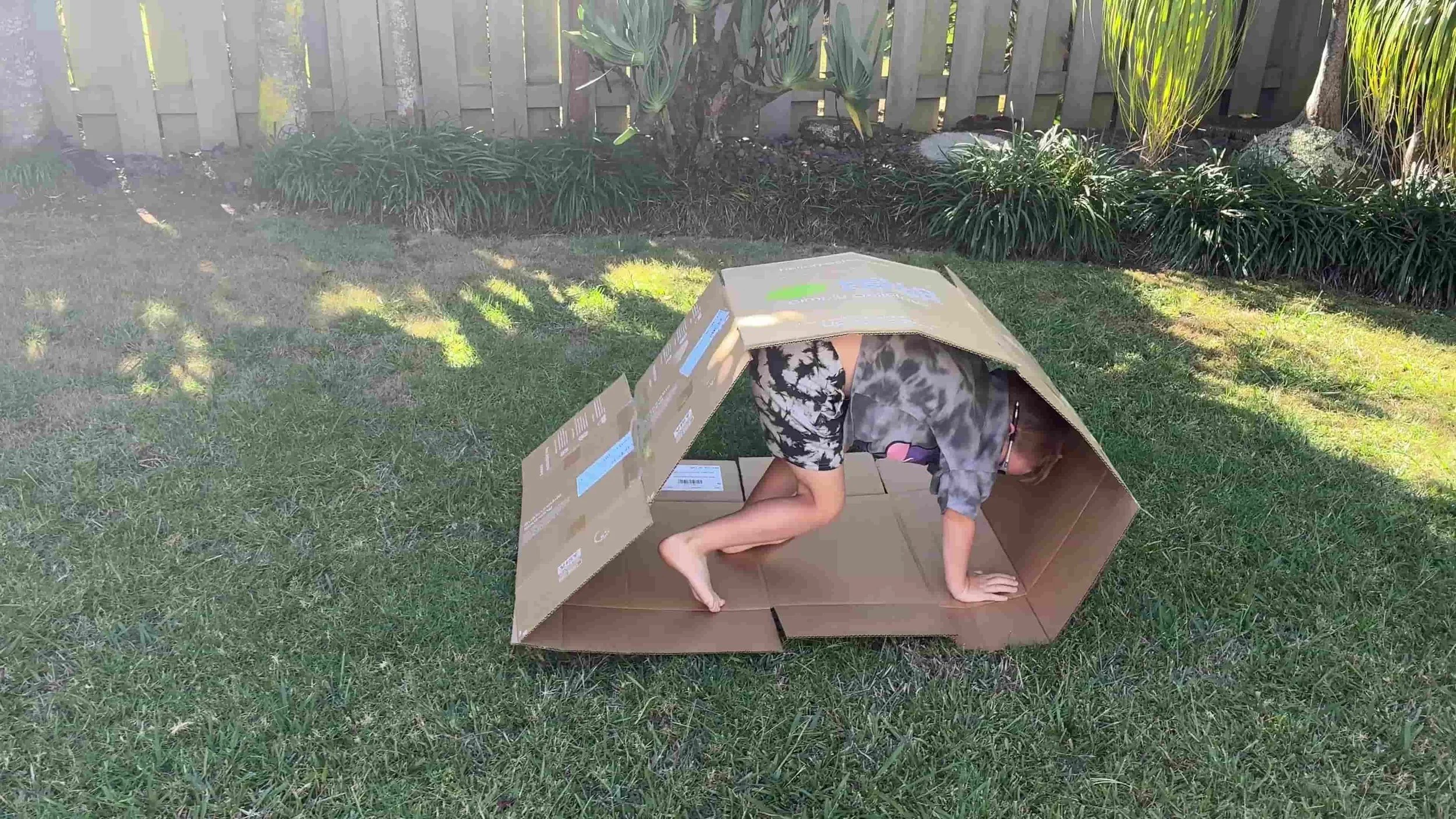
Cardboard Hamster Wheel
This activity turns two cardboard boxes into a giant hamster wheel! Children climb inside the cardboard loop and crawl forwards, making the cardboard roll along with them. It’s a fun gross motor challenge that encourages movement, coordination and body awareness.
You will need:
Two cardboard boxes
Strong tape
Instructions:
Cut open the cardboard boxes and flatten them into large sheets of cardboard.
Join the sheets together with strong tape to create one long strip of cardboard.
Connect the ends to form a large loop, making sure the joins are secure.
The child climbs inside the loop and crawls forwards, moving the cardboard along with them like a hamster wheel.
Walking Hand and Foot Blocks
This is a challenging gross motor activity that tests coordination, balance, problem-solving and timing. Children use four blocks to support their hands and feet, then carefully move the blocks one at a time to work their way forwards. They’ll need to think about where to place each block and coordinate their movements to keep moving along the course.
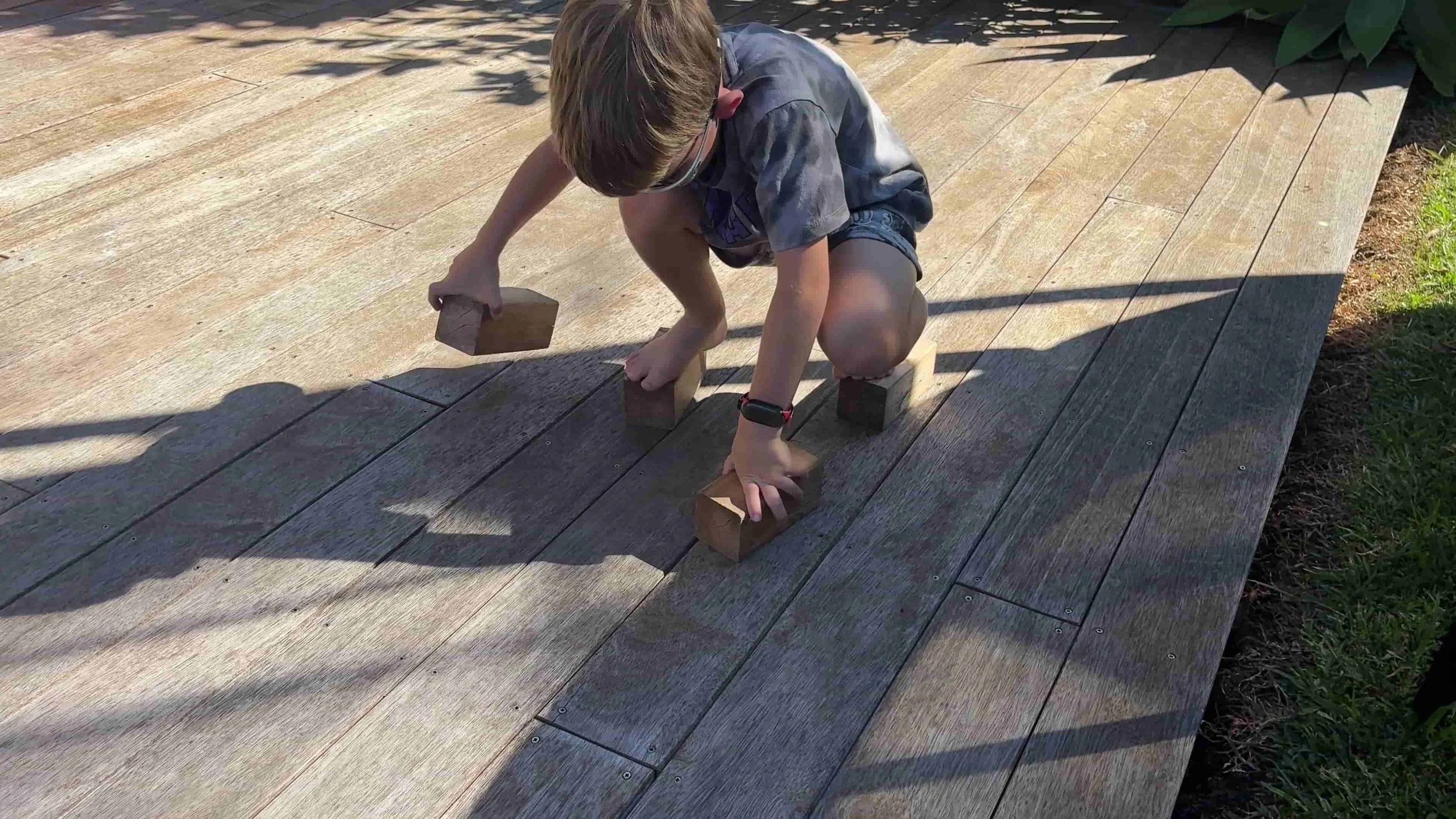
You will need:
Four blocks or sturdy cardboard rectangles
Instructions:
Arrange the four blocks on the floor in the positions where a child’s hands and feet would be when crawling.
The child places their hands and feet on the four blocks, supporting their body above the floor.
The child moves one block from behind them to a position further forwards.
They carefully shift their hands and feet onto the new block positions, keeping their balance as they move.
Repeat the process, moving one block at a time to work their way forwards along the course.
Book Balance Crawl
This is a balance activity but the challenge is that you can’t see what you are balancing because it is on your back. The child will balance a large book on their back while crawling along.
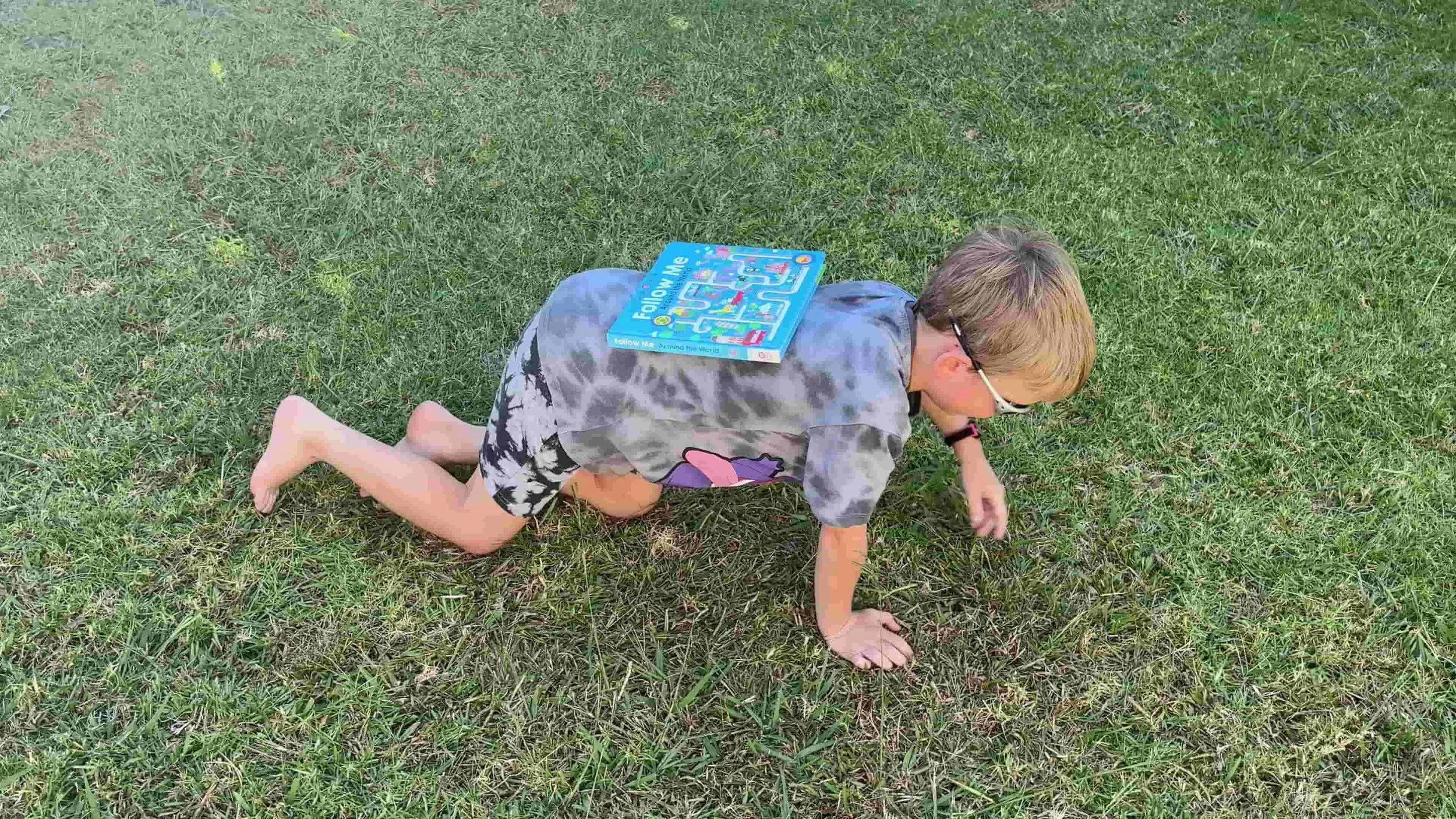
You will need:
A large book
Instructions:
Have the child get into a crawling pose.
Place the large book on the child’s back.
The child will crawl with the book placed on their back and try to keep it from falling off.
Cup Feet Ball Relay
This activity is sure to feel a little unusual! Children wear cups attached to their feet, place a ball in each cup, then walk to a basket and tip the balls out using their feet. It’s a fun gross motor challenge that develops balance, coordination and body control as children work out how to move without dropping the balls along the way.

You will need:
Plastic cups
Ribbon or string
Lightweight balls
Two baskets
Instructions:
Place the balls in one basket and an empty basket a short distance away.
Make two small holes near the bottom of each cup.
Thread ribbon or string through the holes and tie a cup securely to the top of each foot. Make sure the cups aren’t too tight and don’t restrict movement.
The child places one ball in each cup.
They walk carefully to the empty basket and tip the balls into it by tilting their feet.
The child returns to the starting basket, collects two more balls and repeats the challenge until all the balls have been transferred.
Ribbon Hoop Pull
This activity challenges children to use careful coordination and patience as they gently pull a ribbon to bring a hoop and ball towards them. They’ll need to control their movements and adjust how they pull to keep the ball inside the hoop.
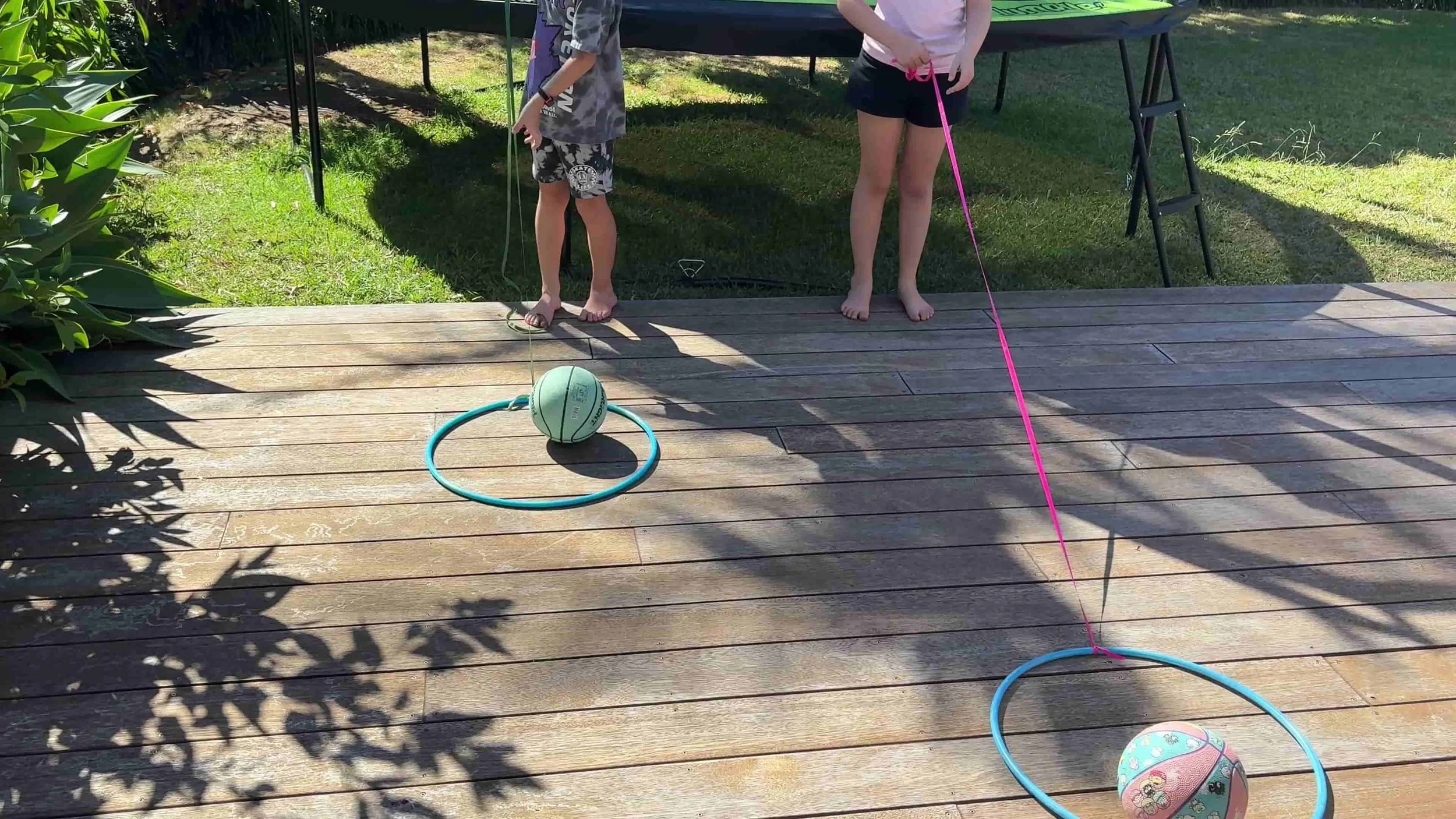
You will need:
Hula hoops
Ribbon or string
Lightweight balls
Instructions:
Tie a length of ribbon to each hoop.
Place a hoop a short distance away from the child and put a ball inside it.
The child gently pulls the ribbon to draw the hoop and ball towards them, taking care not to pull too quickly or let the ball roll out.
Tip: Make the challenge more difficult by attaching the ribbon to a tube or similar object that the child can turn to wind up the ribbon as they pull the hoop closer.
What Skills Do Gross Motor Activities Develop?
These gross motor activities encourage children to use their bodies in different ways, developing a range of movement skills. Many of the challenges involve movements that are less familiar, encouraging children to practise balance, coordination, concentration and body control.
Several activities incorporate different types of crawling, encouraging cross-body movements that involve the left and right sides of the body working together. These movements are combined with additional challenges, such as balancing a book on the back, coordinating hands and feet to move blocks forwards, or developing agility by crawling inside a cardboard hamster wheel.
How to Adapt Gross Motor Activities for Different Ages and Abilities
Gross motor skills are important for children of all ages, but the activities above may need to be adapted to suit different ages, abilities and confidence levels. Adjusting the equipment, distances and level of challenge allows children to participate at their own pace.
Make it easier - Start with shorter distances, lower obstacles or larger targets. Give children time to practise each movement before combining movements into a challenge. Allow them to adjust the activity to suit their confidence and ability. With time and practice, they can gradually build their skills, control and accuracy.
Make it more challenging - Increase the distance, introduce extra obstacles or combine movements that require children to balance and coordinate different parts of their bodies.
Frequently Asked Questions about Gross Motor Skills
What are gross motor activities?
Gross motor skills are the abilities needed to control the large muscles of the body for movements such as running, jumping, climbing, balancing and throwing. These skills help children develop strength, coordination, balance and body control for everyday activities and active play.
Why are gross motor activities important for kids?
Gross motor skills are important because they build strength, balance, coordination and body awareness, while supporting physical independence and providing a foundation for fine motor skills.
What are some easy gross motor activities to do at home?
Easy gross motor activities to do at home include obstacle courses, balancing along a line on the floor, jumping over cushions, throwing and catching balls, crawling under tables and dancing to music. These activities use everyday household items and give children opportunities to practise balance, coordination, strength and body control through active play.
What is the difference between gross motor and fine motor skills?
Gross motor skills involve using the large muscles of the body for movements such as running, jumping, balancing and climbing. Fine motor skills involve smaller movements, particularly those using the hands and fingers, such as drawing, cutting and fastening buttons. Both are important for children's development and everyday activities.
More Play and Movement Ideas
Keep the fun going with more easy play ideas! Explore these activities for more ways to get children moving, building skills and learning through play at home or in the classroom.
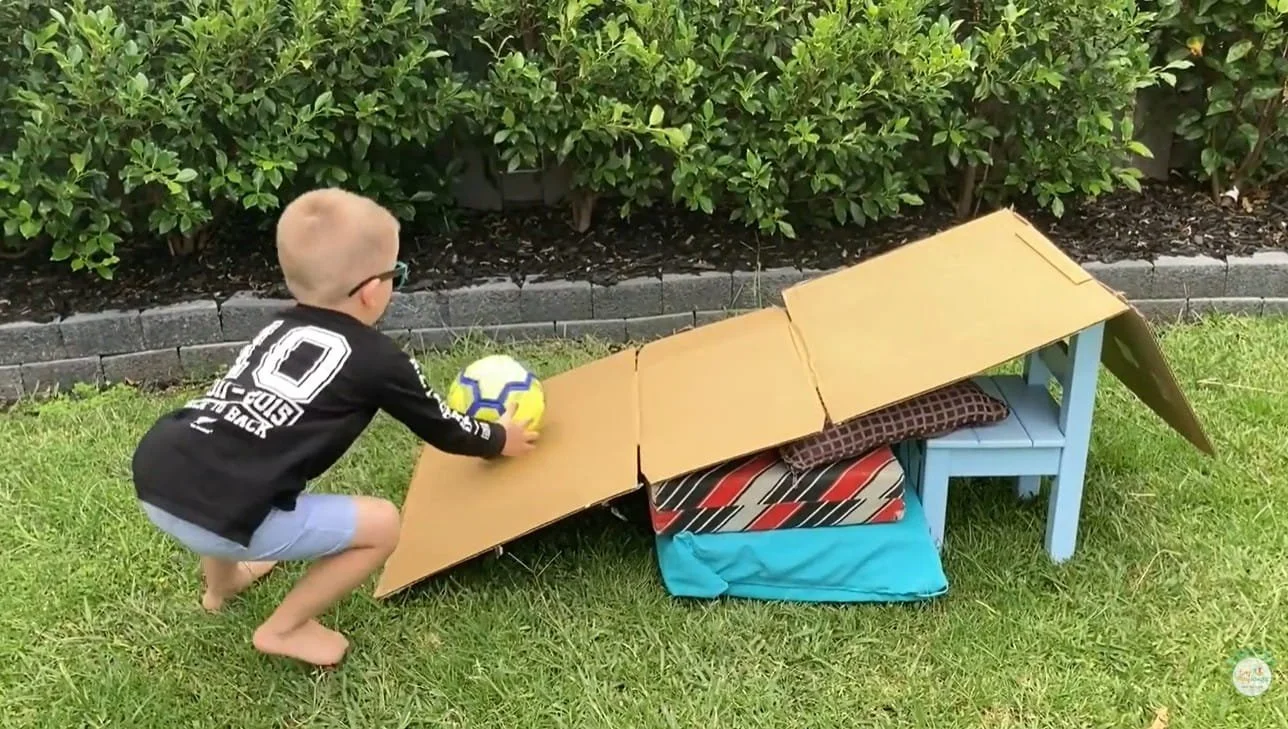
35+ Obstacle Course Ideas Blog

Cooperative Games for Kids Blog

26 Obstacle Course Ideas for kids - Easy Prep and Minimal Equipment Required.