Memory Games for Kids
Memory games are a fun way for kids to practise remembering, concentrating, observing and recalling information. Memory is a skill we use every day, and being able to recall information helps kids make connections, remember what they have learned and retrieve information when they need it later. Playing memory games with others also provides opportunities to practise concentration, turn-taking, patience and social skills.
Easy Memory Games for Kids
Arrow Direction Memory Game
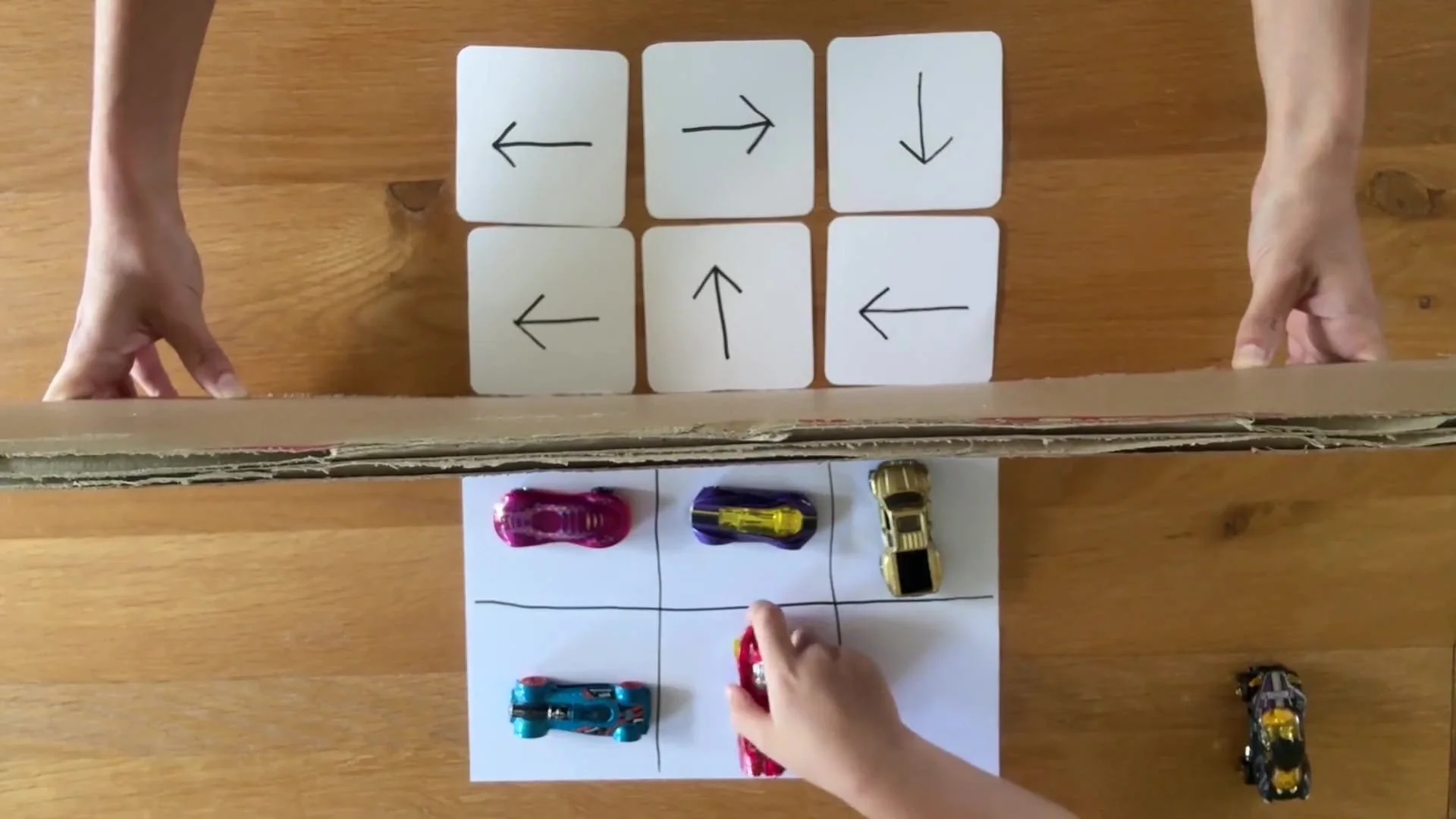
In this game, kids combine cars, directions and memory in a fun brain-teasing challenge. They’ll need to remember the arrow directions and use them to place the cars correctly on the grid, putting their recall skills to the test.
What you need:
Paper or cardboard grid
Toy cars
Paper or cardboard pieces with arrows printed or drawn
Cardboard divider
How to play:
Set up the arrow cards in a grid to match the paper grid, with each arrow pointing in a direction of your choice. Give the child time to study the direction of each arrow and remember where it is positioned. Place a piece of cardboard between the arrow grid and the blank grid to hide the arrows. Ask the child to place the toy cars on the blank grid, positioning each car to match the direction of the corresponding arrow they remember.
Colour Block Memory Game
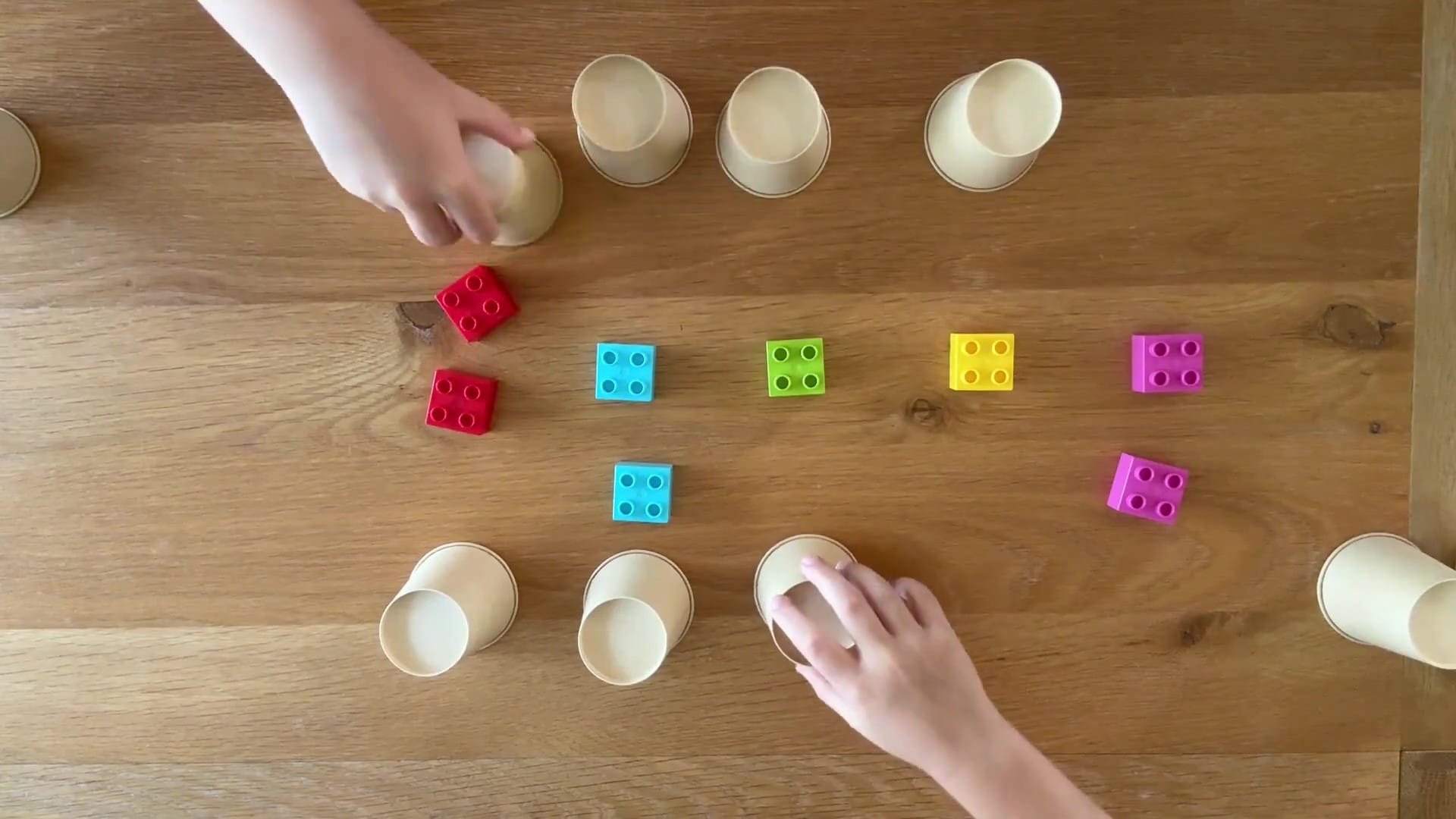
This is a two-player matching game with a fun mystery element, as cups hide the blocks from view. Players race to find and match the correct blocks, putting their memory and recall skills to the test.
What you need:
Cups
Duplo, LEGO or coloured blocks (3 sets)
How to play:
Set up a sequence of blocks between the two players. Place a block of each colour under a cup, creating one matching set for each player. Players take turns choosing a cup and dragging it to a block in the sequence. They then reveal the block underneath their cup to see if it matches.
If it’s a match, they leave the block in place and remove the cup. If it’s not a match, they return the cup to its original position and try again. The first player to match all their blocks wins the game. This can be played by each player taking turns or race style where both players move their cups at the same time.
Number Sequence Memory Game
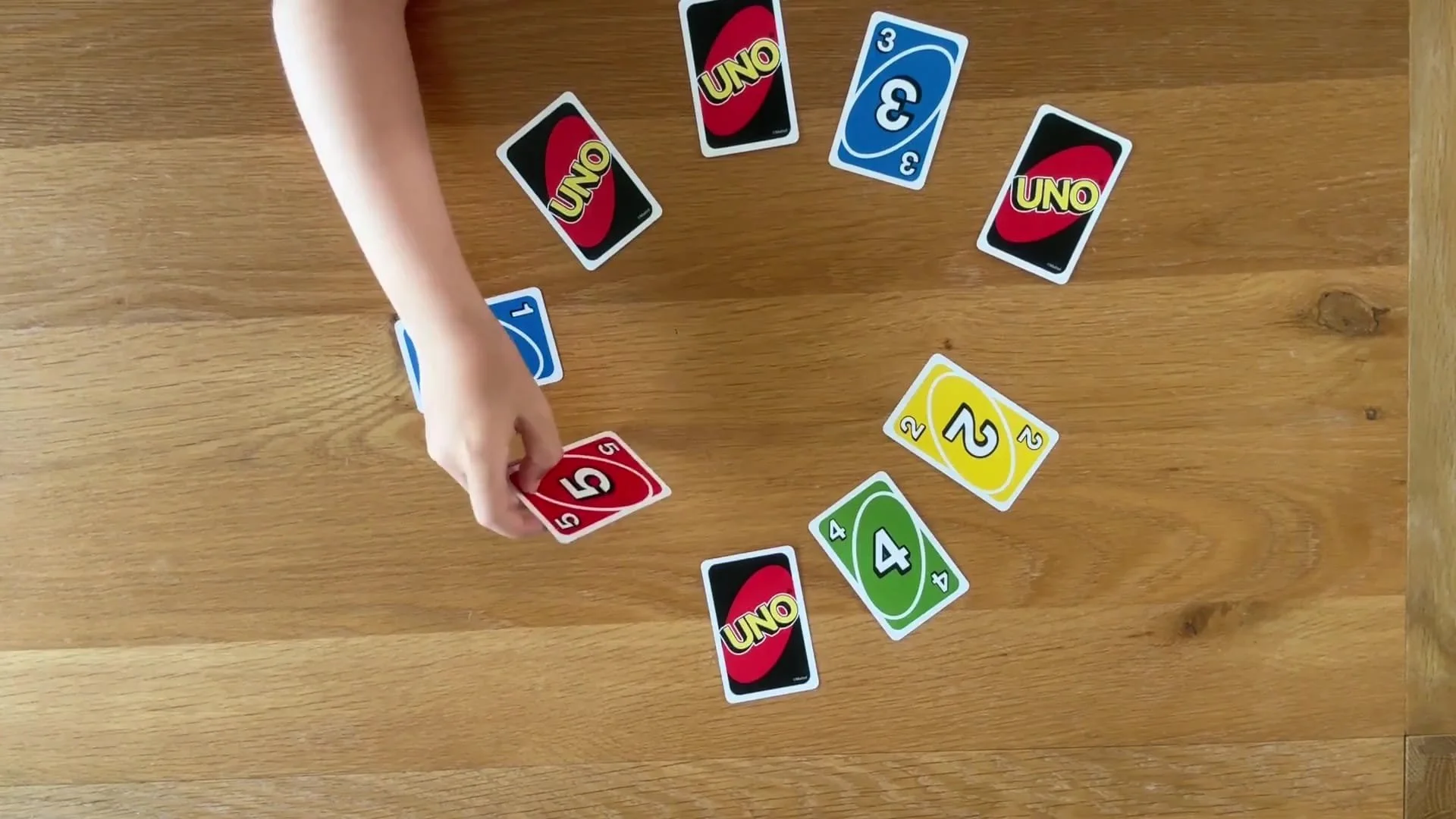
This fun memory game can be played with one or more players. Players reveal number cards one at a time, trying to build the sequence in the correct order. If a number is revealed out of order, the cards are turned over and the challenge begins again.
What you need:
UNO or number cards 1-9 (you can use less or more)
How to play:
Set up the cards in a circle. The first player turns over a card, looking for number 1. If it isn’t number 1, they turn it back over and try another card. Once they find number 1, they continue turning over cards to find number 2, then number 3, and so on.
If they reveal the correct number, they can continue. If they reveal a number out of sequence, all cards are turned face down again and the challenge restarts. With multiple players, the next player can use what they remember about the card locations to try to complete the sequence.
Ball Colour Sequence Memory Game
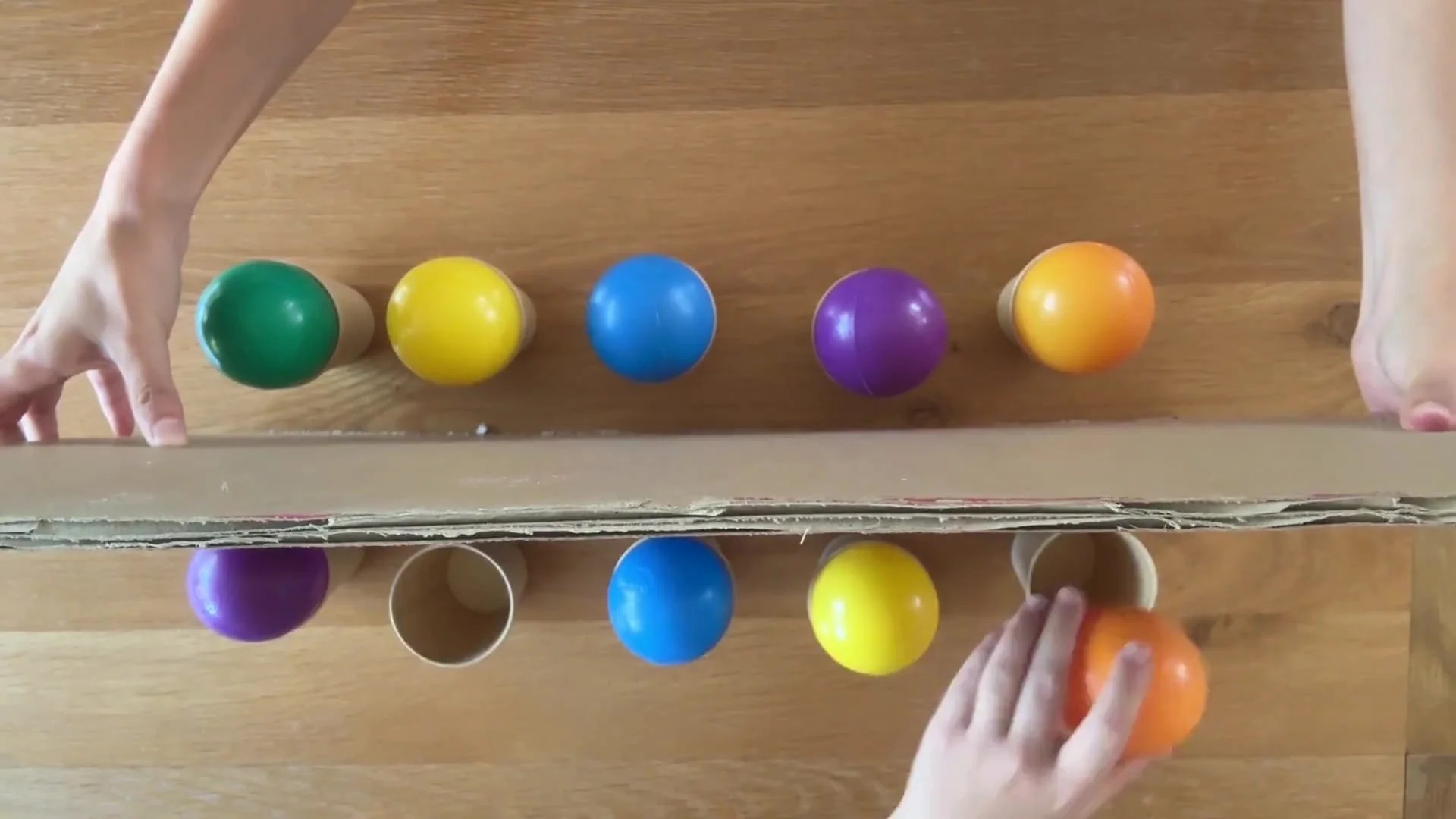
This active memory game challenges players to study a sequence, remember it, and then recreate it. Players must carefully observe the original arrangement before changing their own sequence to match what they have memorised. It’s a fun way to practise memory, observation and recall skills.
What you need:
Two sets of coloured balls
Cups to balance the balls on
Cardboard divider
How to play:
Set up a sequence of coloured balls on cups, then create a different sequence in a separate row. Have the player study the first sequence carefully before covering it with a divider. They must then rearrange their own balls to recreate the sequence they memorised.
Sound Pattern Memory Game
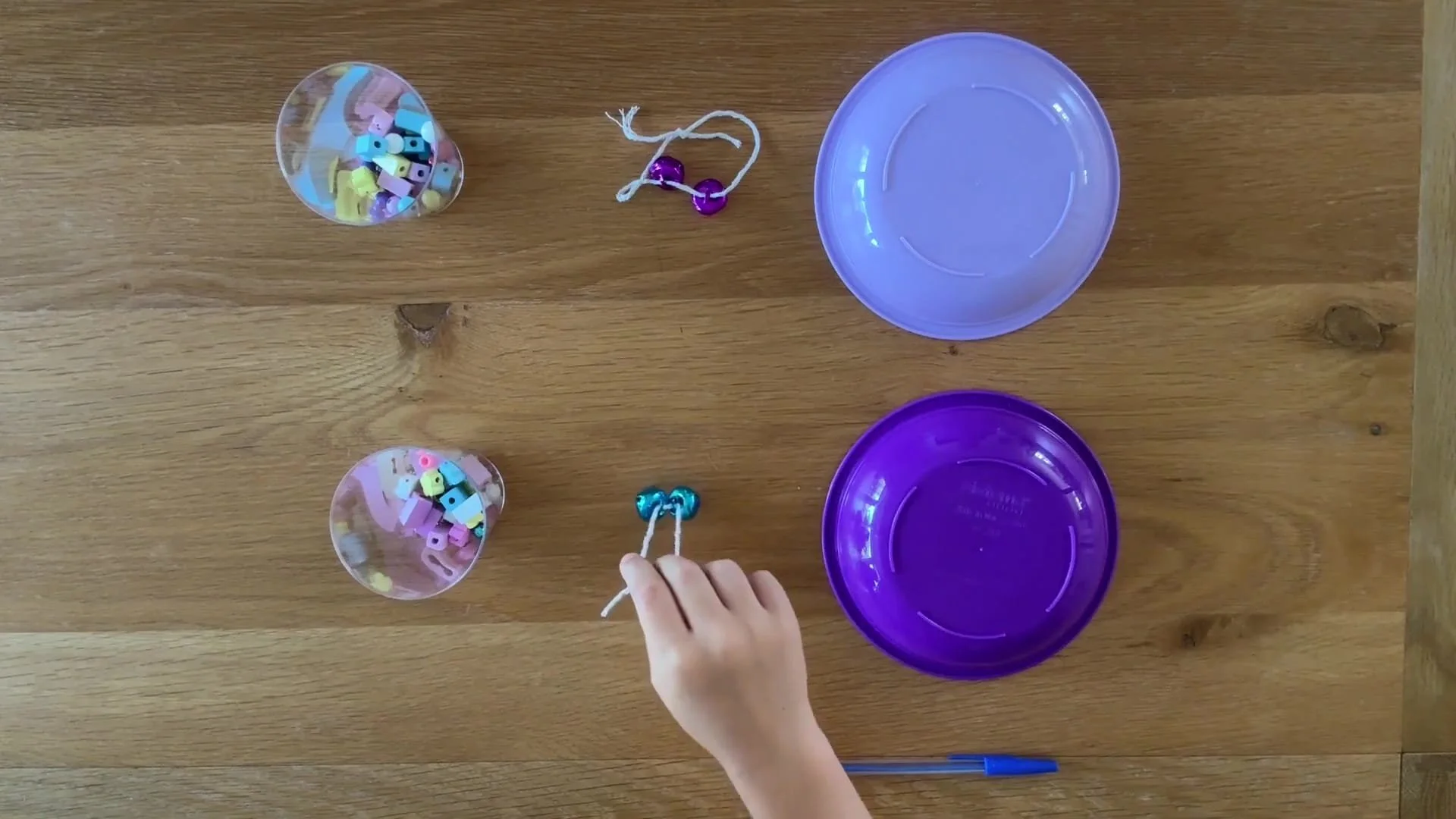
This memory game is a little different because it combines sight and hearing to help players remember a sequence of sounds. An adult or another player creates the sound pattern, while the child listens carefully and then tries to repeat it in the correct order. It’s a fun way to challenge memory, listening and concentration.
What you need:
2 bowls and sticks or pencils to drum
2 sets of bells on a string loop
2 cups filled with beads to shake
How to play:
Set up the three instruments in two rows, with one row for the pattern creator and one for the player. Start with a simple sequence of 3–4 sounds using the instruments. The player listens carefully before repeating the pattern. If they get it correct, repeat the pattern and add one more sound. Continue adding sounds to the sequence, gradually increasing the challenge until it becomes too difficult to remember.
Run and Remember Grid
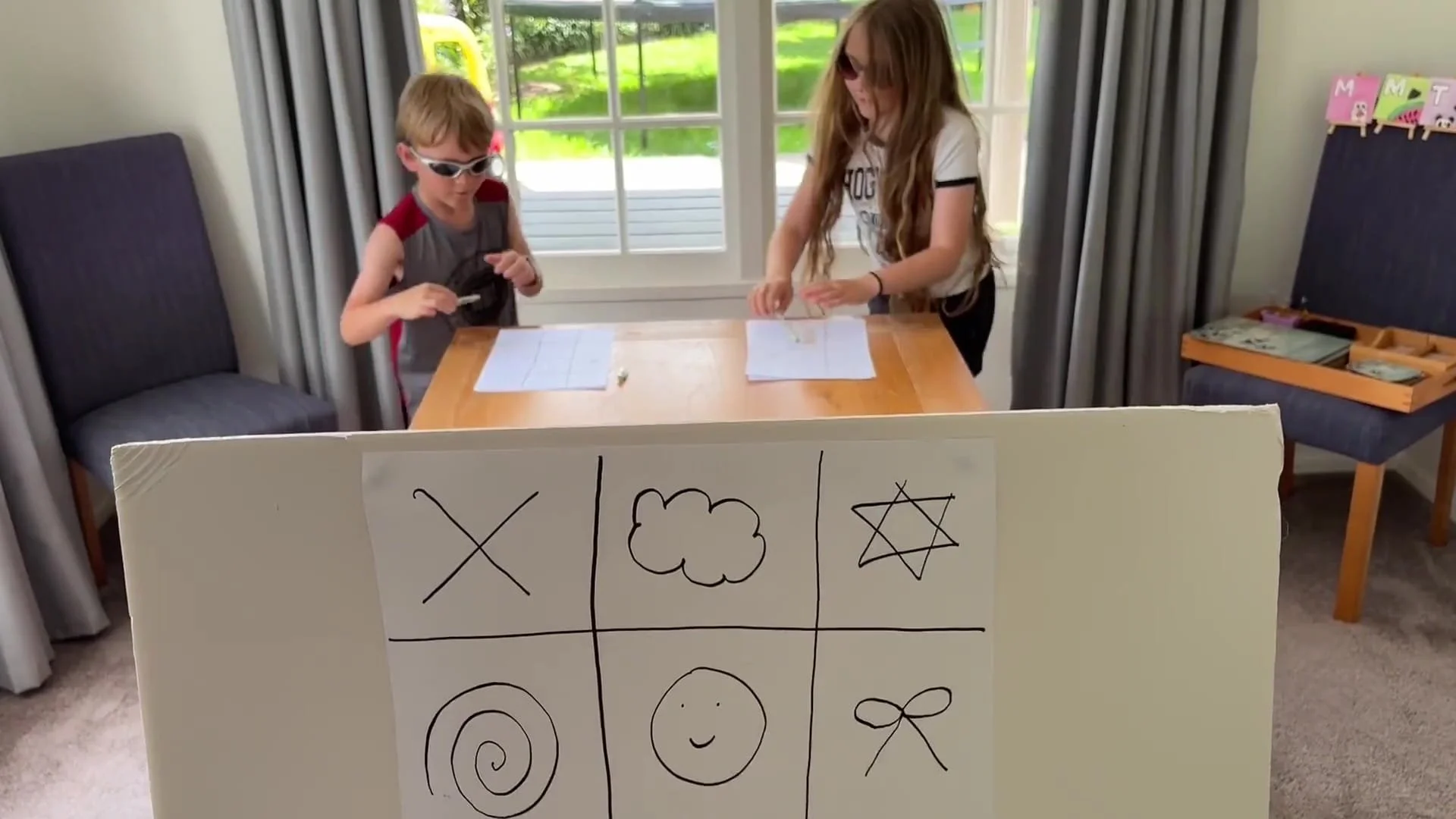
This active memory game combines movement with a memory challenge, making it a fun game for two or more players. Players race to a board, study the symbols and memorise as many as they can before running back to their own grid to recreate them. The first player to correctly copy all the symbols wins!
What you need:
A big piece of paper or cardboard with a grid and symbols drawn (suggested 3 × 4 squares)
A chair or board to place the big grid on
Two A4 pieces of paper with blank grids
Pens
How to play:
Set up the large paper with the grid and symbols (suggested 3 × 4 squares), then draw a matching blank grid on a smaller piece of paper for each player. When the game begins, players run to the large grid and study the symbols, trying to remember as many as they can. They then run back to their own grid and copy down the symbols they remember. Players can return to the large grid as many times as needed until they have correctly completed their grid.
What’s in the Box?
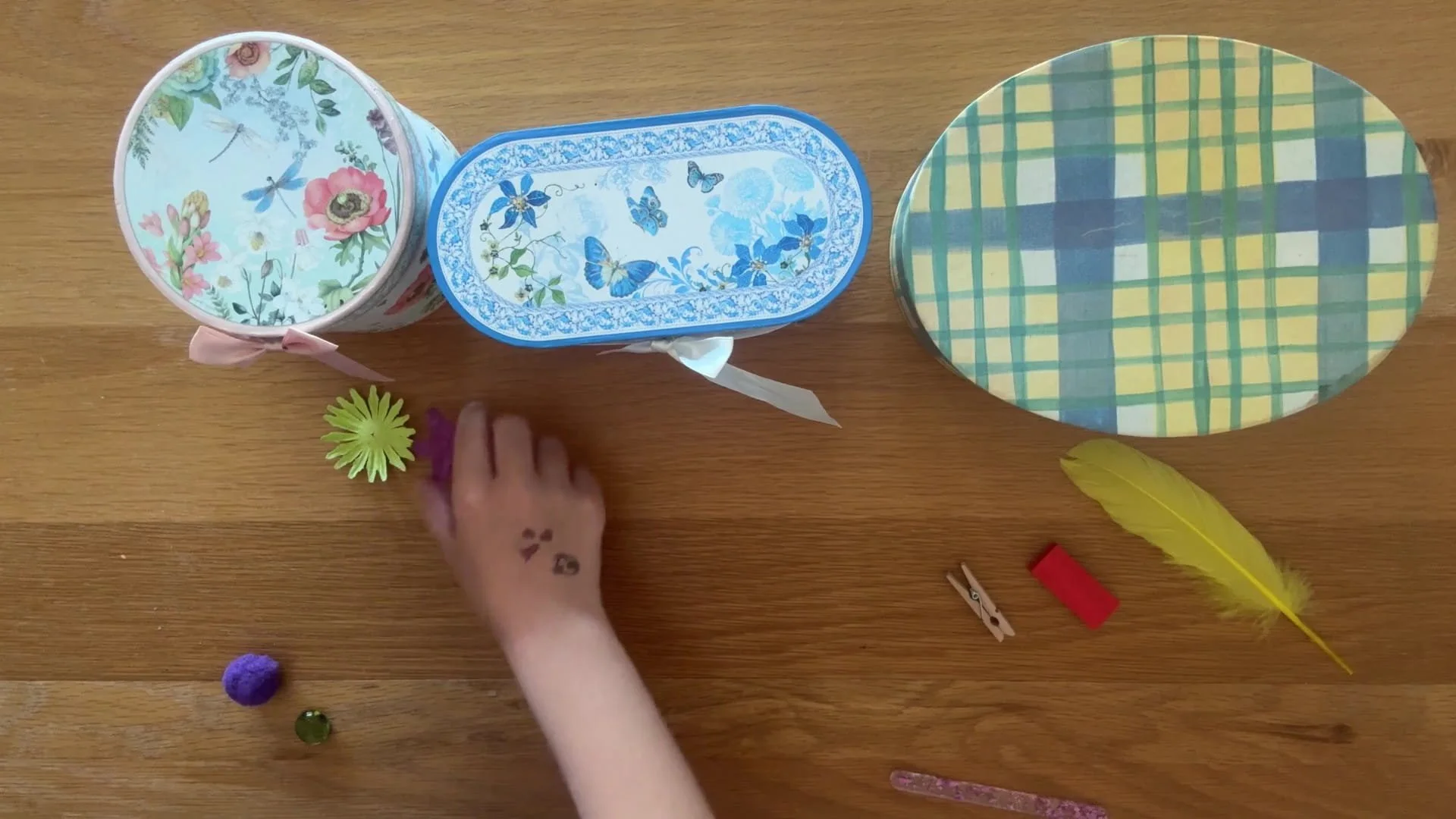
This is a unique memory game that challenges players to remember which items are hidden inside each box. Players need to use their observation and recall skills to work out where each item belongs. It’s trickier than it looks!
What you need:
3 small boxes with lids
2 Sets of 9 - 12 small items
How to play:
One player sets up the boxes by placing a few items inside each one. The player trying to remember the items looks inside each box before the lids are placed on. They then place the items they remember in front of the corresponding boxes. Once they have finished, open the lids to reveal how accurately they remembered what was inside each box.
Cup Tower Memory Game
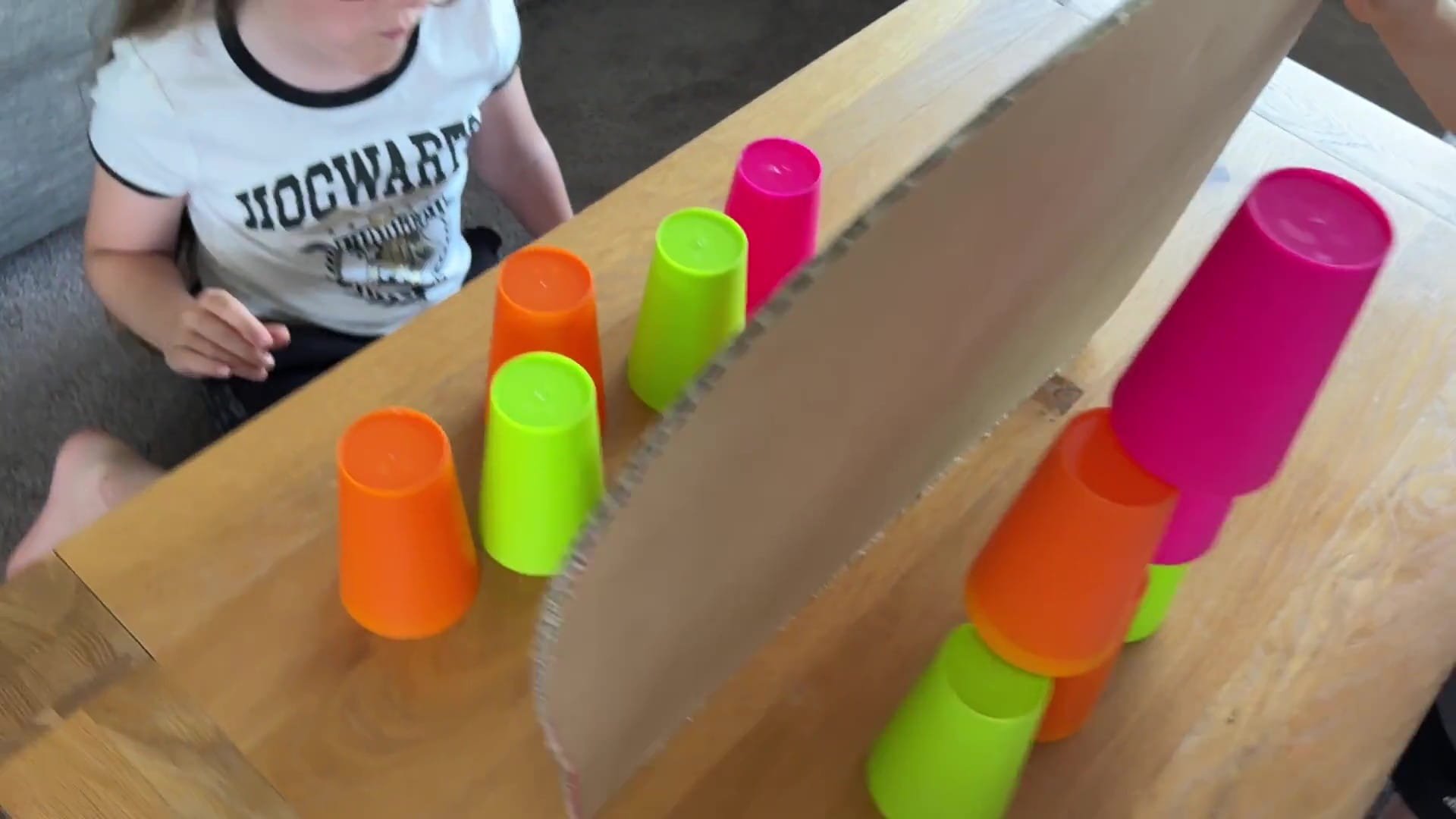
This game is another fun way to practise memorising and recalling a pattern. One player builds a tower using cups while the other player studies the order of the cups and tries to remember it. Place a divider between the players, then challenge the second player to rebuild the tower in the correct order.
What you need:
Two sets of coloured cups
A cardboard divider
How to play:
One player sets up a tower or pyramid using coloured cups while the second player studies the pattern and tries to remember the order of the cups. Place a divider between the players to hide the tower, then challenge the second player to recreate the pattern using their own cups. Remove the divider to reveal the original tower and see how accurately they remembered it.
Watch our Memory Games in Action
We’ve created a video showing all eight memory games in action, so you can see how each one works in practice. It gives you a better idea of the challenge level, how long each game takes, and how the activities are set up. It’s also a helpful visual guide if you’d like to recreate the games at home or in the classroom.
8 Easy Memory Games for Kids
8 Easy Memory Game Ideas for Kids
How to Make Memory Games Easier or Harder
One of the challenges we face when we find an idea for children is that the difficulty might be too hard or too easy. Here are some simple ways you can adjust the game or activity to suit the level of the child or children playing the game.
Add or remove items
If the game involves remembering or using a set of items, such as cards or toys, add more items to make it more challenging or reduce the number to make it easier.
Increase or decrease the sequence length
For games that involve remembering and repeating a pattern or sequence, increase the number of steps to make it more challenging or reduce the length to make it easier.
Increase or decrease study time
If players need to study a pattern or group of items before remembering them, give them more time to look and memorise them to make the game easier. Reduce the study time to increase the challenge.
Add a delay
Make the game more challenging by adding a short delay between studying the pattern or items and recalling them. The longer the delay, the more challenging it will be for the player to recall from memory.
Memory Games for Different Ages
Younger Children
Start with fewer items to remember, giving children time to become familiar with the idea of studying and recalling information. Keep the first experiences with memory games positive and achievable. It can be helpful to make the game very easy at first, so children experience success and build confidence. As their confidence grows, gradually increase the difficulty by adding more items or extending the sequence.
Older Children
Older children who have some experience with memory and recall can usually manage more items or longer sequences, increasing the difficulty of the games. If the games are still too easy, reduce the time they have to study the pattern or add a delay between studying the items and recalling them. Older children may also enjoy the added challenge of playing with others in a race or competition to see who can finish first.
As children become more confident with the games, they can also take on the role of the game leader. Have them take turns creating the pattern for another player to remember and then checking how accurately it is recalled. This gives them a chance to practise their own memory skills while also running the activity.
Mixed Age Groups
Having a group of children of different ages play memory games can seem challenging, but the difficulty can be adjusted to suit each child. Increase or decrease the number of items, the length of the sequence or the complexity of the pattern for each child, allowing everyone to play the same game at a level that is appropriate for them.
Two-player games may be more difficult to manage with a mixed-age group, so individual games or activities where children take turns can be a better option. This allows each child to have their own level of challenge while still playing together.
Frequently Asked Questions
What are memory games for kids?
Memory games are short, playful activities where children study and remember information, then use what they remember to complete a task. This might be as simple as memorising items on a tray and then recalling what was there when the tray is covered, or a more active challenge such as remembering the pattern of a cup tower and rebuilding it from memory.
What skills do memory games help develop?
Memory games can help children develop a range of skills, depending on the type of game. They provide opportunities to practise memory and recall, concentration and observation. Some games also encourage problem-solving and following instructions, while games played with other children can help develop social skills such as patience, cooperation and turn-taking.
How can I make a memory game easier for a child?
To make a memory game easier, reduce the number of items the child needs to remember or shorten the sequence. Once they can confidently remember the smaller number of items, gradually increase the number or length of the sequence to provide a new challenge.
How can I make memory games more challenging?
To make a memory game harder, start by increasing the number of items the child needs to remember or extending the length of the sequence. You can also reduce the amount of time they have to study the items before recalling them. For an extra challenge, add a delay between studying the items and recalling them, making it more difficult to remember the information.
Can memory games be played with more than one child?
Some memory games naturally lend themselves to playing together, while others can be adapted to include more than one child. Children can take turns completing the challenge, giving them the opportunity to watch and learn from each other before having their own turn. They can also take turns being the game leader, with one child creating the pattern or sequence for the other child to study and remember.
More Easy Play & Learning Ideas for Kids
Explore more easy play and learning ideas by clicking the images below.

10 Rubber Band Fine Motor Activities for Kids
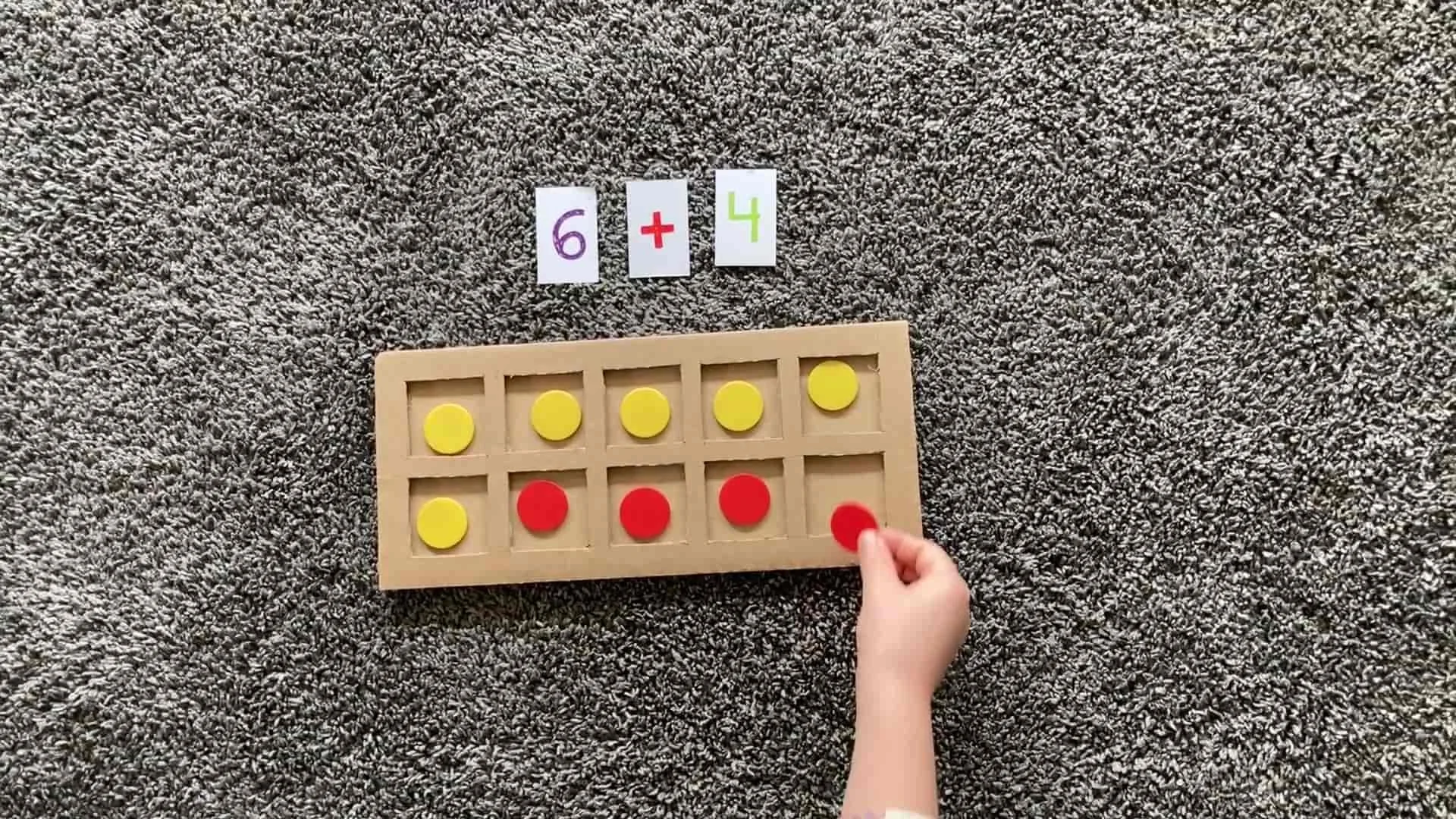
10 Ideas Using Maths Tens Frames

Indoor Game Ideas for a Rainy Day
Printable Matching Games
Looking for a ready-to-use game? These printable matching games are another simple way to get kids practising memory, observation and matching.

This number recognition matching game can be played at home or in the classroom. This printable game comes with a set of 30 cards with pictures of numbers 1 - 10 on each card. Every card has a matching picture to any other card in the set but how fast can you find the match?
Use this printable as a speed-matching game or a way to encourage language and discussion with children. There are so many ways you can use this printable - the possibilities are endless. Use our ideas or make up your own way to play. This is a great little game for home or even in the classroom. Watch out for more matching games in different themes coming soon. The printable comes with 8 pages of playing cards as well as a title page and a page of ideas.
This is a pdf printable only and you will be sent a downloadable link of the purchased game.

Play this fun superhero themed matching game at home or in the classroom. This printable game comes with a set of 30 cards with superhero pictures on each card. Every card has a matching pictures to any other card in the set but how fast can you find the match?
Use this printable as a speed matching game or a way to encourage language and discussion with children. There are so many ways you can use this printable - the possibilities are endless. Use our ideas or make up your own way to play. This is a great little game for home or even in the classroom. Watch out for more matching games in different themes coming soon. The printable comes with 8 pages of playing cards as well as a title page and a page of ideas.
This is a pdf printable only and you will be sent a downloadable link of the purchased game.